Generate Sas Key From Connecton String Azure
- Generate Sas Key From Connection String Azure File
- Generate Sas Key From Connection String Azure Free
- Generate Sas Token Azure Storage
- Generate Sas Key From Connection String Azure Line
An Azure storage account uses credentials comprising an account name and a key. The key is auto-generated and serves as a password, rather than an as a cryptographic key. Key Vault manages storage account keys by storing them as Key Vault secrets.
You can use the Key Vault managed storage account key feature to list (sync) keys with an Azure storage account, and regenerate (rotate) the keys periodically. You can manage keys for both storage accounts and Classic storage accounts.
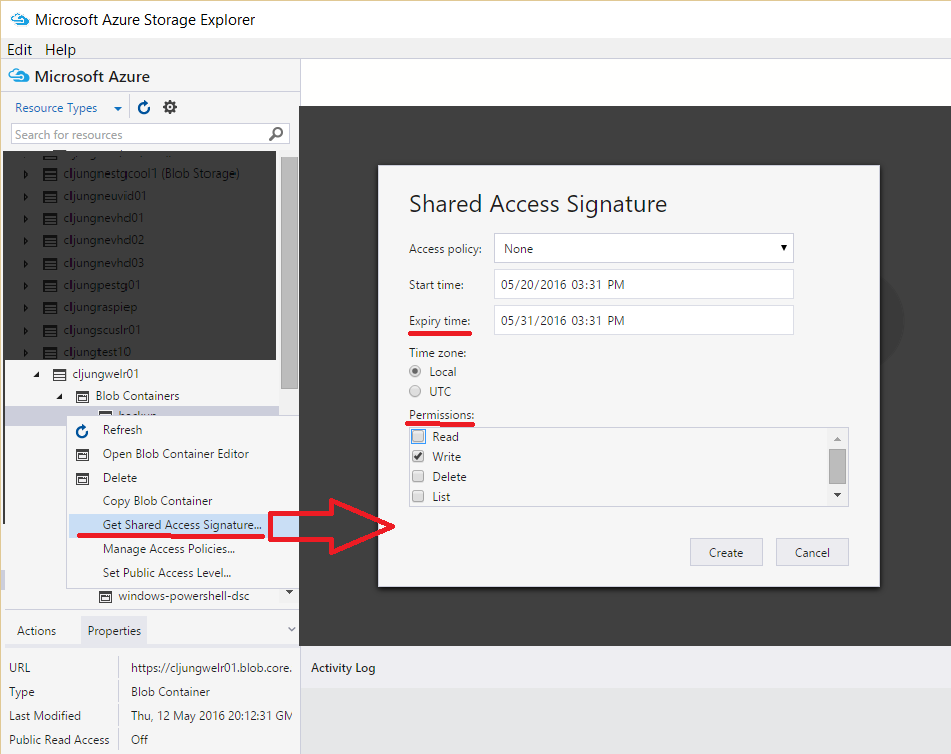
Dec 19, 2019 The most straightforward way to generate a SAS token is using the Azure Portal. By using the Azure portal, you can navigate the various options graphically. To create a token via the Azure portal, first, navigate to the storage account you'd like to access under the Settings section then click Shared access signature. You can see an example of what this might look like below. Azure Storage Account is similar to Azure Cosmos DB, in terms of providing the result after ARM template deployment – it provides only access keys through the listKeys function when it's deployed, not the connection string. Therefore, we should make this up using the concat function. Generate an SAS token for an Azure Storage Account. Generate the SAS token for an Azure Storage Account using UploaderWiz through the Command Prompt. Follow these steps to generate a SAS token for an Azure Storage Account: Click Start, and type CMD. In the search results, right-click Command Prompt, and select Run as administrator. Everything works and I get both he policy and the SAS token generated but I got stuck on one thing that differs from when I generate a SAS token via the Azure portal. I hope that someone can shed some light on the discrepancy. PowerShell script (run as part of deploy pipeline in VSTS).
When you use the managed storage account key feature, consider the following points:
- Key values are never returned in response to a caller.
- Only Key Vault should manage your storage account keys. Don't manage the keys yourself and avoid interfering with Key Vault processes.
- Only a single Key Vault object should manage storage account keys. Don't allow key management from multiple objects.
- You can request Key Vault to manage your storage account with a user principal, but not with a service principal.
- Regenerate keys by using Key Vault only. Don't manually regenerate your storage account keys.
We recommend using Azure Storage integration with Azure Active Directory (Azure AD), Microsoft's cloud-based identity and access management service. Azure AD integration is available for Azure blobs and queues, and provides OAuth2 token-based access to Azure Storage (just like Azure Key Vault).
Azure AD allows you to authenticate your client application by using an application or user identity, instead of storage account credentials. You can use an Azure AD managed identity when you run on Azure. Managed identities remove the need for client authentication and storing credentials in or with your application.
Azure AD uses role-based access control (RBAC) to manage authorization, which is also supported by Key Vault.
Service principal application ID
An Azure AD tenant provides each registered application with a service principal. The service principal serves as the Application ID, which is used during authorization setup for access to other Azure resources via RBAC.
License key generator for gta 5. Key Vault is a Microsoft application that's pre-registered in all Azure AD tenants. Key Vault is registered under the same Application ID in each Azure cloud.
| Tenants | Cloud | Application ID |
|---|---|---|
| Azure AD | Azure Government | 7e7c393b-45d0-48b1-a35e-2905ddf8183c |
| Azure AD | Azure public | cfa8b339-82a2-471a-a3c9-0fc0be7a4093 |
| Other | Any | cfa8b339-82a2-471a-a3c9-0fc0be7a4093 |
Prerequisites
To complete this guide, you must first do the following:
- Install the Azure CLI.
- Create an Azure storage account. The storage account name must use only lowercase letters and numbers. The length of the name must be between 3 and 24 characters.
Manage storage account keys
Connect to your Azure account
Authenticate your Azure CLI session using the az login commands.
Give Key Vault access to your storage account
Use the Azure CLI az role assignment create command to give Key Vault access your storage account. Provide the command the following parameter values:
--role: Pass the 'Storage Account Key Operator Service Role' RBAC role. This role limits the access scope to your storage account. For a classic storage account, pass 'Classic Storage Account Key Operator Service Role' instead.--assignee-object-id: Pass the value '93c27d83-f79b-4cb2-8dd4-4aa716542e74', which is the Object ID for Key Vault in the Azure public cloud. (To get the Object ID for Key Vault in the Azure Government cloud, see Service principal application ID.)--scope: Pass your storage account resource ID, which is in the form/subscriptions/<subscriptionID>/resourceGroups/<StorageAccountResourceGroupName>/providers/Microsoft.Storage/storageAccounts/<YourStorageAccountName>. To find your subscription ID, use the Azure CLI az account list command; to find your storage account name and storage account resource group, use the Azure CLI az storage account list command.
Create a Key Vault Managed storage account
Create a Key Vault managed storage account using the Azure CLI az keyvault storage command. Set a regeneration period of 90 days. After 90 days, Key Vault regenerates key1 and swaps the active key from key2 to key1. key1 is then marked as the active key. Provide the command the following parameter values:
--vault-name: Pass the name of your key vault. To find the name of your key vault, use the Azure CLI az keyvault list command.-n: Pass the name of your storage account. To find the name of your storage account, use the Azure CLI az storage account list command.--resource-id: Pass your storage account resource ID, which is in the form/subscriptions/<subscriptionID>/resourceGroups/<StorageAccountResourceGroupName>/providers/Microsoft.Storage/storageAccounts/<YourStorageAccountName>. To find your subscription ID, use the Azure CLI az account list command; to find your storage account name and storage account resource group, use the Azure CLI az storage account list command.
Shared access signature tokens
You can also ask Key Vault to generate shared access signature tokens. A shared access signature provides delegated access to resources in your storage account. You can grant clients access to resources in your storage account without sharing your account keys. A shared access signature provides you with a secure way to share your storage resources without compromising your account keys.
The commands in this section complete the following actions:
- Set an account shared access signature definition
<YourSASDefinitionName>. The definition is set on a Key Vault managed storage account<YourStorageAccountName>in your key vault<YourKeyVaultName>. - Create an account shared access signature token for Blob, File, Table, and Queue services. The token is created for resource types Service, Container, and Object. The token is created with all permissions, over https, and with the specified start and end dates.
- Set a Key Vault managed storage shared access signature definition in the vault. The definition has the template URI of the shared access signature token that was created. The definition has the shared access signature type
accountand is valid for N days. - Verify that the shared access signature was saved in your key vault as a secret.
Create a shared access signature token
Create a shared access signature definition using the Azure CLI az storage account generate-sas command. This operation requires the storage and setsas permissions.
After the operation runs successfully, copy the output.
Generate Sas Key From Connection String Azure File
This output will be the passed to the --template-id parameter in the next step.
Generate a shared access signature definition
Use the the Azure CLI az keyvault storage sas-definition create command, passing the output from the previous step to the --template-id parameter, to create a shared access signature definition. You can provide the name of your choice to the -n parameter.
Verify the shared access signature definition
You can verify that the shared access signature definition has been stored in your key vault using the Azure CLI az keyvault secret list and az keyvault secret show commands.
First, find the shared access signature definition in your key vault using the az keyvault secret list command.
The secret corresponding to your SAS definition will have these properties:
You can now use the az keyvault secret show command and the id property to view the content of that secret.
Generate Sas Key From Connection String Azure Free
The output of this command will show your SAS definition string asvalue.
Office 13 product key generator. However, to avail advanced functions, there’s a subscription charge for any tool software under the load up. The subscription payment unlocks the services of the amount up for a period, usually per year. The unpleasant work of data entry no more requires maintenance of details, ledgers or logbooks, through Microsoft Excel, a credit card application within the Microsoft Office load up, the task can be carried out with efficiency.
Generate Sas Token Azure Storage
Next steps
Generate Sas Key From Connection String Azure Line
- Learn more about keys, secrets, and certificates.
- Review articles on the Azure Key Vault team blog.
- See the az keyvault storage reference documentation.