Generate Ssh Public And Private Keys
- Generate Ssh Public And Private Keys Work
- Create Ssh Public And Private Key Linux
- Generate Ssh Public And Private Keys Explained
Dec 18, 2019 The two most popular mechanisms are passwords based authentication and public key-based authentication. Using SSH keys is more secure and convenient than traditional password authentication. In this tutorial, we will walk through how to generate SSH keys on Ubuntu 18.04 machines. Generate online private and public key for ssh, putty, github, bitbucket. Save both of keys on your computer (text file, dropbox, evernote etc)! The generated keys are random/unique and we can't restore a missing key. You will need to copy/set the public key on to the remote server/service. Mar 27, 2019 Connect to your SSH server using WinSCP with the SSH protocol, using other means of authentication than public key, e.g. Typically using password authentication. Once logged in, configure your server to accept your public key. That varies with SSH server software being used. The most common SSH server is OpenSSH.
-->Sep 06, 2019 Generating a key pair and propagating the public key. Generating your key pair and propagating your public key is simpler than it sounds. Let’s walk through it. Generating the key. The minimum effort to generate a key pair involves running the ssh-keygen command, and choosing the defaults at all the prompts. Nov 10, 2011 How to Generate A Public/Private SSH Key Linux 1. Open a terminal. In the next screen, you should see a prompt, asking you for the location to save the key. Next, you will be prompted to enter passphrase. Your public and private SSH key should now be generated.
Most authentication in Windows environments is done with a username-password pair.This works well for systems that share a common domain.When working across domains, such as between on-premise and cloud-hosted systems, it becomes more difficult.
Sep 06, 2019 Keys can also be distributed using Ansible modules. The opensshkeypair module uses ssh-keygen to generate keys and the authorizedkey module adds and removes SSH authorized keys for particular user accounts. SSH key pairs are only one way to automate authentication without passwords.
By comparison, Linux environments commonly use public-key/private-key pairs to drive authentication.OpenSSH includes tools to help support this, specifically:
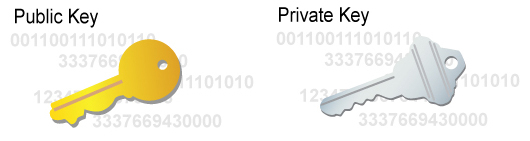
- ssh-keygen for generating secure keys
- ssh-agent and ssh-add for securely storing private keys
- scp and sftp to securely copy public key files during initial use of a server
This document provides an overview of how to use these tools on Windows to begin using key authentication with SSH.If you are unfamiliar with SSH key management, we strongly recommend you review NIST document IR 7966 titled 'Security of Interactive and Automated Access Management Using Secure Shell (SSH).'
About key pairs
Key pairs refer to the public and private key files that are used by certain authentication protocols.
SSH public-key authentication uses asymmetric cryptographic algorithms to generate two key files – one 'private' and the other 'public'. The private key files are the equivalent of a password, and should protected under all circumstances. If someone acquires your private key, they can log in as you to any SSH server you have access to. The public key is what is placed on the SSH server, and may be shared without compromising the private key.
When using key authentication with an SSH server, the SSH server and client compare the public key for username provided against the private key. If the public key cannot be validated against the client-side private key, authentication fails.
Multi-factor authentication may be implemented with key pairs by requiring that a passphrase be supplied when the key pair is generated (see key generation below).During authentication the user is prompted for the passphrase, which is used along with the presence of the private key on the SSH client to authenticate the user.
Host key generation
Public keys have specific ACL requirements that, on Windows, equate to only allowing access to administrators and System.To make this easier,
- The OpenSSHUtils PowerShell module has been created to set the key ACLs properly, and should be installed on the server
- On first use of sshd, the key pair for the host will be automatically generated. If ssh-agent is running, the keys will be automatically added to the local store.
To make key authentication easy with an SSH server, run the following commands from an elevated PowerShell prompt:
Since there is no user associated with the sshd service, the host keys are stored under ProgramDatassh.
User key generation
To use key-based authentication, you first need to generate some public/private key pairs for your client.From PowerShell or cmd, use ssh-keygen to generate some key files.
This should display something like the following (where 'username' is replaced by your user name)
You can hit Enter to accept the default, or specify a path where you'd like your keys to be generated.At this point, you'll be prompted to use a passphrase to encrypt your private key files.The passphrase works with the key file to provide 2-factor authentication.For this example, we are leaving the passphrase empty.
Now you have a public/private ED25519 key pair(the .pub files are public keys and the rest are private keys):
Remember that private key files are the equivalent of a password should be protected the same way you protect your password.To help with that, use ssh-agent to securely store the private keys within a Windows security context, associated with your Windows login.To do that, start the ssh-agent service as Administrator and use ssh-add to store the private key.
After completing these steps, whenever a private key is needed for authentication from this client, ssh-agent will automatically retrieve the local private key and pass it to your SSH client.
Note
Mar 09, 2020 Overview of Windows 7 Product Key Generator Windows 7 is a generally accepted Windows worldwide. It is now widely considered as the Windows OS with the friendliest interface. This makes people have an interest in getting it installed on their laptop. Various kinds of people use it, both for personal works and for business-oriented programs. Windows 7 genuine key generator manual. Jan 31, 2020 Windows 7 Ultimate ISO is a widely used operating system. However, you will need a Windows 7 product key to complete the installation process. To obtain a genuine copy of Windows, you must purchase a Windows 7 product key from the Microsoft Store. Unfortunately, many people don’t buy a Windows product key for one reason or another. Nov 24, 2019 Windows 7 Product Key Generator 32/64 bit Working 100%. Windows 7 Product Key readily available for public use after three several years of the release of windows vista. It is completely updated and changed the system that is running the sooner incarnations of Windows. Windows 7 Product Key Generator is fixed the most favorite operating system because of its excellent feature-wealthy environment, impressive start menu and most importantly its user-friendly interface, which makes it unique Windows operating system out there. It’s coded in a safe and secures new way so that it cannot be discovered through the authorized developer referred to like Microsoft.
It is strongly recommended that you back up your private key to a secure location,then delete it from the local system, after adding it to ssh-agent.The private key cannot be retrieved from the agent.If you lose access to the private key, you would have to create a new key pairand update the public key on all systems you interact with.
Deploying the public key
To use the user key that was created above, the public key needs to be placed on the server into a text file called authorized_keys under usersusername.ssh.The OpenSSH tools include scp, which is a secure file-transfer utility, to help with this.
To move the contents of your public key (~.sshid_ed25519.pub) into a text file called authorized_keys in ~.ssh on your server/host.
This example uses the Repair-AuthorizedKeyPermissions function in the OpenSSHUtils module which was previously installed on the host in the instructions above.
These steps complete the configuration required to use key-based authentication with SSH on Windows.After this, the user can connect to the sshd host from any client that has the private key.
-->With a secure shell (SSH) key pair, you can create virtual machines (VMs) in Azure that use SSH keys for authentication, eliminating the need for passwords to sign in. This article shows you how to quickly generate and use an SSH public-private key file pair for Linux VMs. You can complete these steps with the Azure Cloud Shell, a macOS or Linux host, the Windows Subsystem for Linux, and other tools that support OpenSSH.
Note
VMs created using SSH keys are by default configured with passwords disabled, which greatly increases the difficulty of brute-force guessing attacks.
For more background and examples, see Detailed steps to create SSH key pairs.
For additional ways to generate and use SSH keys on a Windows computer, see How to use SSH keys with Windows on Azure.
Supported SSH key formats
Azure currently supports SSH protocol 2 (SSH-2) RSA public-private key pairs with a minimum length of 2048 bits. Other key formats such as ED25519 and ECDSA are not supported.
Create an SSH key pair
Use the ssh-keygen command to generate SSH public and private key files. By default, these files are created in the ~/.ssh directory. You can specify a different location, and an optional password (passphrase) to access the private key file. If an SSH key pair with the same name exists in the given location, those files are overwritten.
The following command creates an SSH key pair using RSA encryption and a bit length of 4096:
If you use the Azure CLI to create your VM with the az vm create command, you can optionally generate SSH public and private key files using the --generate-ssh-keys option. The key files are stored in the ~/.ssh directory unless specified otherwise with the --ssh-dest-key-path option. The --generate-ssh-keys option will not overwrite existing key files, instead returning an error. In the following command, replace VMname and RGname with your own values:
Provide an SSH public key when deploying a VM
To create a Linux VM that uses SSH keys for authentication, specify your SSH public key when creating the VM using the Azure portal, Azure CLI, Azure Resource Manager templates, or other methods:
If you're not familiar with the format of an SSH public key, you can display your public key with the following cat command, replacing ~/.ssh/id_rsa.pub with the path and filename of your own public key file if needed:
A typical public key value looks like this example:
If you copy and paste the contents of the public key file to use in the Azure portal or a Resource Manager template, make sure you don't copy any trailing whitespace. To copy a public key in macOS, you can pipe the public key file to pbcopy. Similarly in Linux, you can pipe the public key file to programs such as xclip.
The public key that you place on your Linux VM in Azure is by default stored in ~/.ssh/id_rsa.pub, unless you specified a different location when you created the key pair. To use the Azure CLI 2.0 to create your VM with an existing public key, specify the value and optionally the location of this public key using the az vm create command with the --ssh-key-values option. In the following command, replace VMname, RGname, and keyFile with your own values:
If you want to use multiple SSH keys with your VM, you can enter them in a space-separated list, like this --ssh-key-values sshkey-desktop.pub sshkey-laptop.pub.
Generate Ssh Public And Private Keys Work
SSH into your VM
With the public key deployed on your Azure VM, and the private key on your local system, SSH into your VM using the IP address or DNS name of your VM. In the following command, replace azureuser and myvm.westus.cloudapp.azure.com with the administrator user name and the fully qualified domain name (or IP address):
If you specified a passphrase when you created your key pair, enter that passphrase when prompted during the login process. The VM is added to your ~/.ssh/known_hosts file, and you won't be asked to connect again until either the public key on your Azure VM changes or the server name is removed from ~/.ssh/known_hosts.
Create Ssh Public And Private Key Linux
If the VM is using the just-in-time access policy, you need to request access before you can connect to the VM. For more information about the just-in-time policy, see Manage virtual machine access using the just in time policy.
Next steps
Generate Ssh Public And Private Keys Explained
For more information on working with SSH key pairs, see Detailed steps to create and manage SSH key pairs.
Mar 06, 2014 Download Halo Keygen for free. Since Microsoft no longer supports Halo: Combat Evolved for PC I can say this Is legal. However it should only be used if you OWN the game! Halo ce serial key. May 21, 2018 Halo Custom Edition Product Key Keygen - DOWNLOAD 1159b5a9f9 Halo Ce Key Generator was added to DownloadKeeper this week. Serial, keygen, free, full, version, hacked. Which implies it is the full version of the product.
If you have difficulties with SSH connections to Azure VMs, see Troubleshoot SSH connections to an Azure Linux VM.