Generating New Ssh Key Mac Email Address
SiteGround uses key pairs for SSH authentication purposes, as opposed to plain username and password. More information on SSH keys is available here. You can generate an SSH key pair in Mac OS following these steps: Open up the Terminal by going to Applications - Utilities. Generating a new SSH key. Open Terminal Terminal Git Bash. Paste the text below, substituting in your GitHub email address. $ ssh-keygen -t rsa -b 4096 -C 'youremail@example.com' This creates a new ssh key, using the provided email as a label. Generating public/private rsa key pair.
- Generating New Ssh Key Mac Email Address 2016
- Generating New Ssh Key Mac Email Address 2017
- Generate Ssh Key Mac With Email
- Ssh Key Setup
Unlock the full course today
Join today to access over 15,000 courses taught by industry experts or purchase this course individually.
From the course: Learning SSH
Course details
Secure Shell (SSH) offers a safe way to communicate with a server and to connect to systems remotely. Consequently, SSH is a vital skill for anyone who works in IT. In this short course, Scott Simpson explains what SSH is and shows how to connect to an SSH server from different operating systems. He also demonstrates how to transfer files via SSH File Transfer Protocol (SFTP) and secure copy (SCP), and how to set up your own SSH server on Linux and Mac OS X.
Instructor
Scott Simpson
Learn. Build. Teach.
Scott Simpson has a master's in education and currently creates technology courses as an author at LinkedIn.
Scott has been interested in computers since he was about seven years old, and for most of that time, he's been teaching friends, family, and strangers how to use them. This geeky hobby turned into a job with Apple during college, and after completing his master's degree in education at San Diego State University, he has helped to shape the Developer segment here at lynda.com as a content producer. Scott enjoys building web apps and exploring new technologies. He can be found on Twitter at @scotty82.
Skills covered in this course
Related courses
Welcome
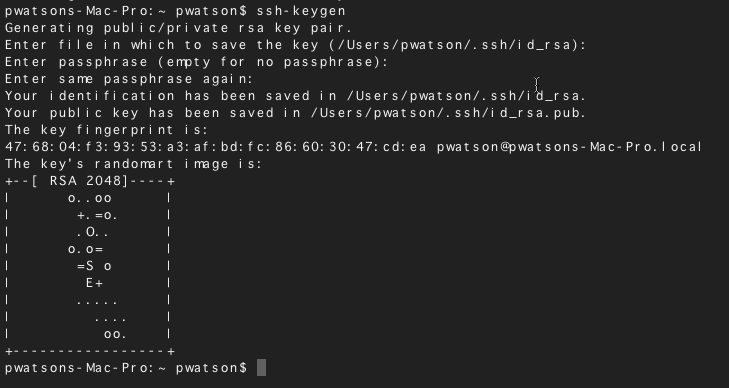
“- To generate a key pair on a Mac or Linux machine, in the terminal I'll write ssh-keygen -t rsa to specify the RSA encryption algorithm type. RSA is a widely used encryption algorithm. This will start up an interactive series of prompts asking you where you want to store the key. In this case, I'll leave it as the default. You could rename the key if you anticipate having many different keys. I'll press enter to accept this recommendation. The next option is whether to set a pass phrase. This might seem a little counter intuitive, given that we're using a key to avoid using a password for the log in, but this is the pass phrase to unlock the key, not to log directly into the remote server. Keys are great but if your private key gets stolen, anyone with that file will be able to log into that server as you. Setting a password on the key helps makes it harder for an attacker to do this. Every time you need to unlock the key to use it, you'll need to type the password, so make it…
Practice while you learn with exercise files
Download the files the instructor uses to teach the course. Follow along and learn by watching, listening and practicing.
Download the exercise files for this course. Get started with a free trial today.
Download courses and learn on the go
Watch courses on your mobile device without an internet connection. Download courses using your iOS or Android LinkedIn Learning app.
Watch this course anytime, anywhere. Get started with a free trial today.
Contents
Generating a new ssh-key
Open Terminal.Paste the text below, substituting in your GitHub email address.
ssh-keygen -t rsa -b 4096 -C 'your_email@example.com'
This creates a new ssh key, using the provided email as a label
Generating public/private rsa key pair.
- When you're prompted to
Enter a file in which to save the keypressEnterto accept the default file location.
Enter the file in which to save the key (you can press ENTER for default path):
(/Users/you/.ssh/id_rsa): [Press enter]
How to generate an SSH key and add your public key to the server for authentication Step 1: Check for SSH Keys. First, check for existing SSH keys on your computer. Step 2: Generate a new SSH key. With your command line tool still open, enter the text shown below. Step 3: Add your key to the. Use a command like the following to copy SSH key: This logs into the server host, and copies keys to the server, and configures them to grant access by adding them to the authorizedkeys file. The copying may ask for a password or other authentication for the server. Only the public key is copied to the server. Copying the ssh key using normal ssh user/pass as one liner from our local machine or after logging in the server. 2.1 Using the ssh-copy-id command ssh-copy-id will handle the copy and setup of the key to a remote server in the proper way for you. Once the command is completed you will not need a. Generate ssh key and copy to server. The public key, however, is meant to be saved on the servers you intend to access, in the “/.ssh/authorizedkeys” file (or rather, pasted/added to this file). To open this key, to copy, and then paste, wherever necessary, enter the following in Command Prompt. If you are running Windows and PuTTYTray for SSH, you can use the built-in key generator from PuTTY to create a new key pair. Click the Keygen button at the bottom of the PuTTY Configuration window to get started. Then in the Key Generator window, check that the Type of key to generate at the bottom is set to SSH-2.
At the prompt, type a secure passphrase.
Generating New Ssh Key Mac Email Address 2016
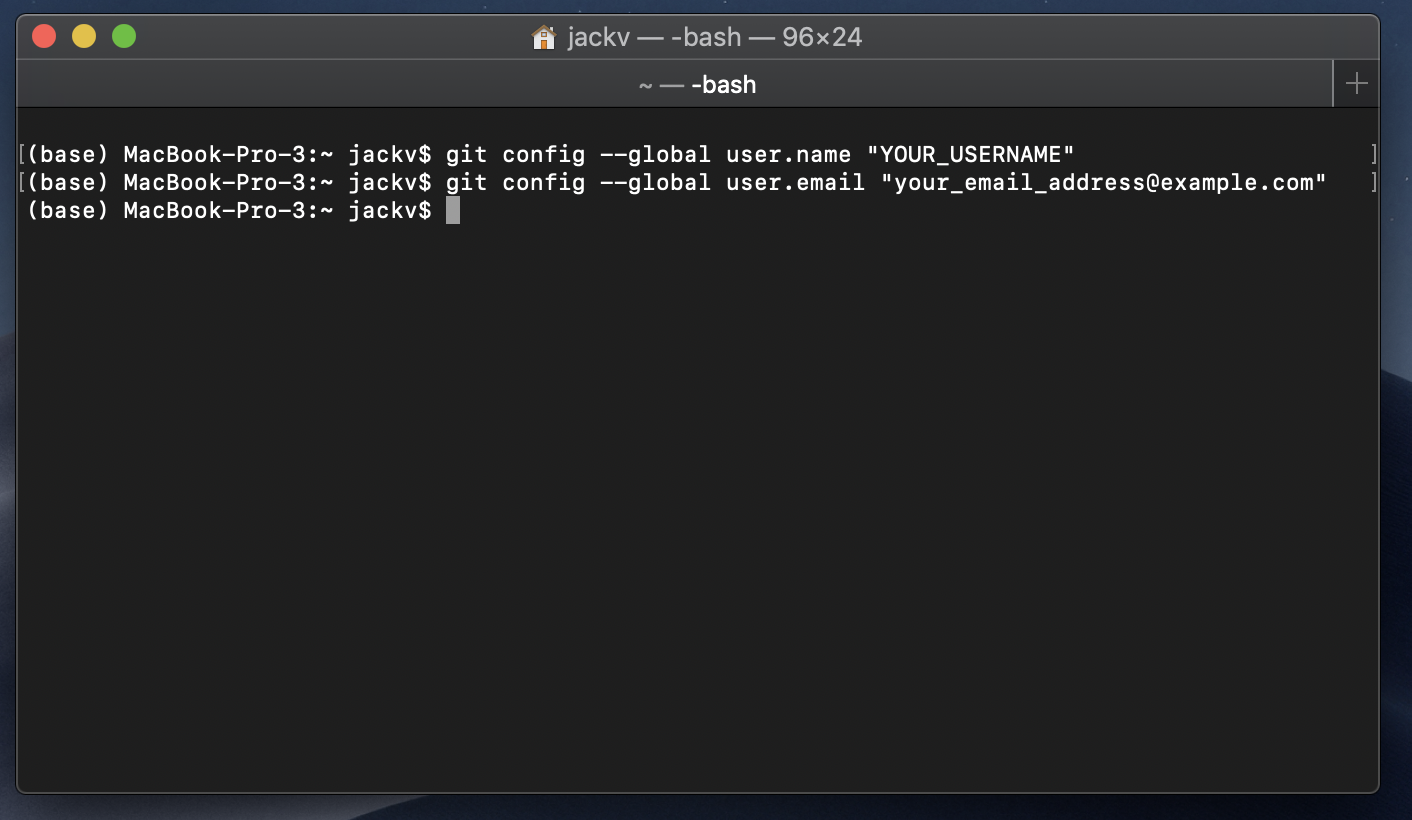
Enter passphrase (empty for no passphrase): [Type a passphrase]
Enter same passphrase again: [Type passphrase again]
Generating New Ssh Key Mac Email Address 2017
Adding your SSH key to the ssh-agent
Before adding a new SSH key to the ssh-agent, you should have checked for existing SSH keys and generated a new SSH key.
Ensure ssh-agent is enabled:
start the ssh-agent in the background
eval '$(ssh-agent -s)'
Agent pid 59566
Generate Ssh Key Mac With Email
Add your SSH key to the ssh-agent. If you used an existing SSH key rather than generating a new SSH key, you'll need to replace id_rsa in the command with the name of your existing private key file.
Ssh Key Setup
$ ssh-add ~/.ssh/id_rsa