Sequelize Model Generate Primary Key
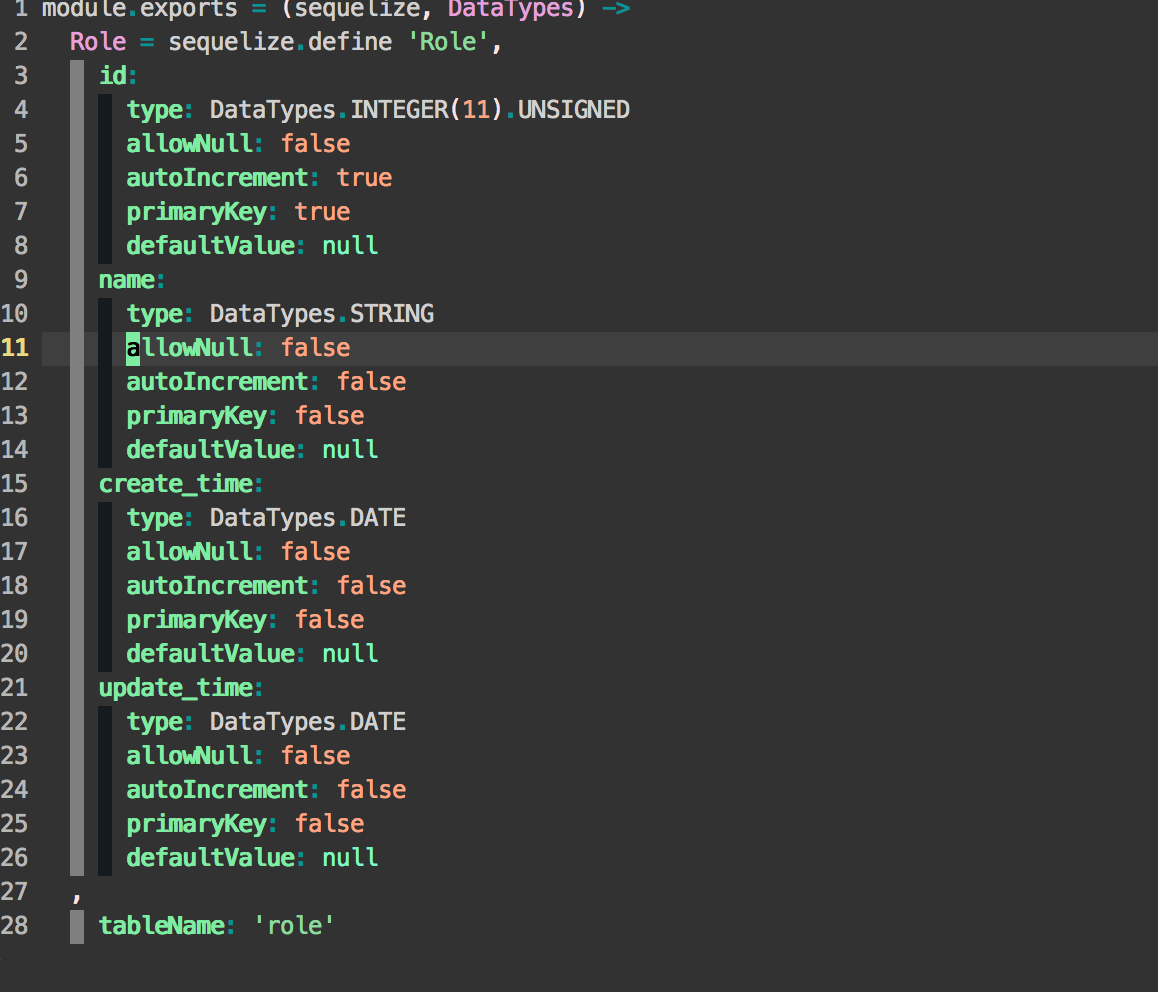
Primary keys Sequelize will assume your table has a id primary key property by default. To define your own primary key: And if your model has no primary key at all you can use Model.removeAttribute('id').
CREATE TABLE IF NOT EXISTS `User` ( `id` INTEGER PRIMARY KEY, `username` VARCHAR(255) ); CREATE TABLE IF NOT EXISTS `Task` ( `id` INTEGER PRIMARY KEY, `title` VARCHAR(255), `userid` INTEGER ); To add references constraints to the columns, you can pass the options onUpdate and onDelete to the association calls. Foreign keys. By default the foreign key for a belongsTo relation will be generated from the target model name and the target primary key name. The default casing is camelCase however if the source model is configured with underscored: true the foreignKey will be snakecase. Nov 14, 2013 request: create to return full model #1060. Closed bblack opened this issue Nov 14. BulkCreate does not return any autoincremented primary keys, because. The database, not sequelize, is responsible for choosing that value. Model.create returns object without primary key #4374. Closed This comment has been minimized. How to set primary key type to UUID via Sequelize CLI. Ask Question Asked 3 years. Active 28 days ago. Viewed 15k times 11. I'm creating a DB model via Sequelize CLI with this command: sequelize model:create -name User -attributes 'firstname:string, lastname:string'. The primary key is set to integer. Is there a way to default. Sequelize also defines by default the fields id (primary key), createdAt and updatedAt to every model. This behavior can also be changed, of course (check the API Reference to learn more about the available options). Changing the default model options. Sequelize is a great ORM for NodeJS applications that are built on relational backends. Inevitably, you'll need to update your models as the database requirements change. Or if you did something silly. Here's a real life approach to using Sequelize to doing database migrations.
| /* |
| * Migration |
| */ |
| 'use strict'; |
| module.exports={ |
| up: function(queryInterface,Sequelize){ |
| returnqueryInterface.createTable('Users',{ |
| firstName: { |
| type: Sequelize.STRING |
| }, |
| lastName: { |
| type: Sequelize.STRING |
| }, |
| email: { |
| type: Sequelize.STRING |
| }, |
| createdAt: { |
| allowNull: false, |
| type: Sequelize.DATE |
| }, |
| updatedAt: { |
| allowNull: false, |
| type: Sequelize.DATE |
| } |
| }) |
| .then(()=>{ |
| returnqueryInterface.sequelize.query('ALTER TABLE 'Users' ADD CONSTRAINT 'username' PRIMARY KEY ('firstName', 'lastName')'); |
| }) |
| }, |
| down: function(queryInterface,Sequelize){ |
| returnqueryInterface.dropTable('Users'); |
| } |
| }; |
| /* |
| * Model |
| */ |
| 'use strict'; |
| module.exports=function(sequelize,DataTypes){ |
| varUser=sequelize.define('users',{ |
| firstName: { |
| type: DataTypes.STRING, |
| primaryKey: true, |
| }, |
| lastName: { |
| type: DataTypes.STRING, |
| primaryKey: true, |
| }, |
| email: DataTypes.STRING |
| }); |
| User.removeAttribute('id'); |
| returnUser; |
| }; |
commented Feb 18, 2018
This gist save me the day !!! I just modified the create compound primary sentence to use |
commented Mar 2, 2018
Hey just came across this gist and it really helped me. After some digging, I just wanted to point out that you could also add the constraint like this if you want to avoid the raw sql: |
commented Apr 24, 2018
You can also just say (Against sequelize@4.33.4) |
commented Sep 24, 2018
How do we use findOne() method in this case? I want to find a record given the first name and the last name using findOne() method which looks up the row using the primary key |
commented May 7, 2019
@narayana1043 Let me know if this was helpful, Thanks. |

commented Jul 31, 2019
Sequelize Composite Primary Key
I did like @jmlsf mentioned, but had to add Generate a public key for ssh mac. |
commented Apr 14, 2020 • edited
edited
Sequelize Model Generate Primary Key Of Life
When I create a composite key, by specifying Thanks |